Saturday, October 15, 2011

Bamboo Rafting down Langat River - Quest of the bloody orchid

15 October 2011. Its been a four days dry spell, and we were hoping that it would remain so ,at least for today and tomorrow. Today, because we had planned to bamboo raft down the Langat River and tomorrow because we have guests coming for some horse riding.

We arrived at the embarking point at about 9.30 a.m. Waiting for us was Tok Batin Andak and Ramli, his fellow villager. Tok Batin Andak, we shall call him Andak from now on, is the Headman (Chieftain) of the aboriginal tribe of Temuan. We were pleasantly surprised and greatly honored that the Headman himself had decided to be the guide and steerman for this expedition. Waiting for us were two bamboo rafts anchored to the river bank.
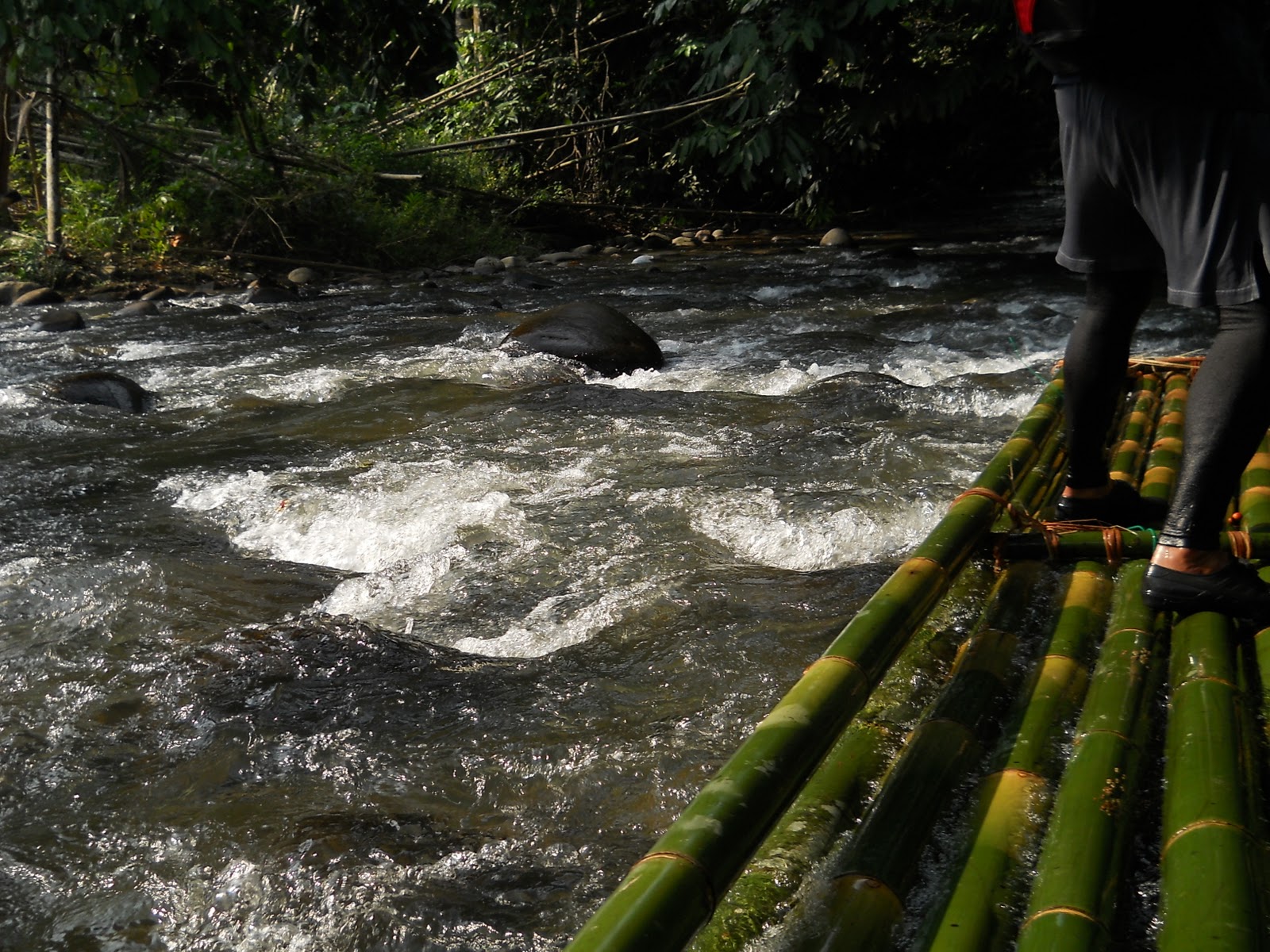
The raft was of a seemingly simple, yet durable design, if you know how to make them. That looks can be deceiving is all too clear in this case. Made entirely out of materials from the jungle it measures about 30 feet in length, composed of 9 stems of bamboo of about 6 inches in diameter each. This gives it a width of about 4.5 feet which, with the length of about 30 feet makes for great stability. Cross spars are from "tempinis" branches, which though small in diameter are durable yet flexible. The bamboo stems are lashed to the cross spars with the outer bark of "nyilang" rattan. This particular rattan is preferred again for durability and flexibility. See, the key, it seems to making a good bamboo raft is to make sure it is durable yet flexible. As it manouvers the rocky river bed the raft must be able to take bending and stretching stresses imposed on it. Make the raft too rigid by using ropes, wires or even round rattan for example, the bending and stretching will simply snap the wires, the rope or round rattan and you will end up swimming the rest of the journey. Guiding poles (2 of them) are also made of tempinis stems. Again their durability will ensure that they do not snap when caught under rocks or boulders. Their small diameter also means easier handling. So we now know how to make rafts, let's go make them. Good luck. 
So, we are set to go. Of course, the mandatory pre-trip photo.
It was quite an experience sitting on these rafts. After the initial trepidation we found that it was more stable than a regular boat. Initially too we were contented to squat on our haunches, but Andak, with a mixture of amusement and disgust on his face politely told us that position will ensure we will have no problem using the squatting toilet for the next few weeks. Still wondering what he meant, we decided its best to sit properly on the raft and wet our royal bottoms. Early into the voyage we hit shallow water. That involved some heaving and shoving.
Soon though, the journey went into deeper waters and we had a great time viewing the landscape from the water level. Whilst we stay quite near to the river, because the river meanders as it makes its way downstream, there are many areas which are almost entirely foreign to us. Difficult to imagine that this is just 40 minutes from Kuala Lumpur.


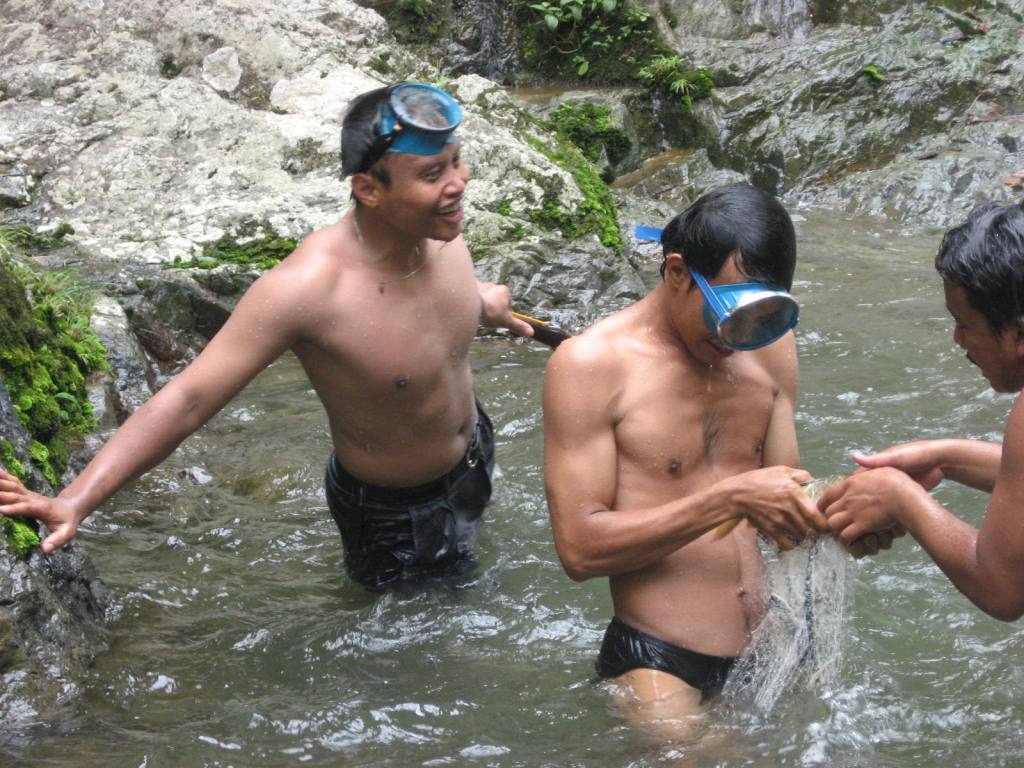
After about 40 minutes we came to Lubuk Anggun. This is where Sungai Congkak joins Sungai Langat. Time for a short break and inspect the rafts. Whilst Andak and Ramli inspect the raft the passengers took the opportunity for a quick dip in the cool waters.
The journey resumed.


After about another hour we reached our destination, grinning ear to ear fully satisfied with the experience. We bid goodbye to Andak and Ramli with promises to meet again, soon. So what about the bloody orchid?.. What orchid? We just wanted an excuse to have fun.

Tuesday, October 4, 2011

THE KING AND I

The Malays call the wedding couple "RAJA SEHARI", which simply means King for the Day. On that day their wish is their command and everyone is obliged to comply, at least in theory. Actually in the old days, this was taken very seriously.

Truly traditional Malay weddings can be a really drawn out affair. It begins months before that and would involve the entire village. In the old days about two weeks before the wedding proper, the villages will gather at the house of the groom to discuss what needs to be done for the occasion. Tasks and parties responsible for their execution will then be identified. Everyone chips in labor and material contributions depending on what they can afford. The lesser endowed members of the village would still contribute something, be it a bundle of firewood for cooking. By this time the villagers take over the entire management of the event relieving the groom's parent of the headache.

So whilst the men would head to the jungle to gather the materials required for the event infrastructure, the women would be busy designing and preparing the various ornaments and decorations for the event. Apart from the usual shelters to accommodate the guest the most important structure would be the bridal diaz on which the wedding couple would then be displayed to the guests. As in any other culture announcement of the wedding is important to avoid any misconception when they are seen later going together in public, what more with a child or two in tow. 

So the two weeks prior to the actual day is actually a festival of sorts where work inter-mix with socializing for the entire village. Yes, I mean the entire village. There is no such thing as a restricted guest list, everyone is invited. So we can imagine the cost involved as well, but since everyone contributes the burden is lightened. As the Malay saying goes "berat same dipikul, ringgan sama dijenjeng" - the heavy load will be shared by all shoulders whilst a lighter load will be carried by all hands.

So the final day arrives and the groom is prepared in all splendor to go to the bride's house, where the same busy preparatory madness has been going on for weeks. To make sure that he looks his best the Mak Andam is employed. The Mak Andam is more than just a make-up lady. In the old days she would also have certain mystical skills to enhance the presentation of the bride and bridegroom as well as to thwart any ill intention from any party (jealousy or just plain meanness) by way of magic or witchcraft. Nowadays, the most effective counter-measure against such unseen dangers is of course the all-mighty dollar.

So off went the groom to the bride's house accompanied by an entourage of close family members and friends, not forgetting the customary "warrior" to ensure that nothing untoward befall him when he is at the bride's place. Those days social gatherings are not always a time of cheer and joy. In a world then of pride and valor, there will occasionally be misfits who, based on misplaced pride and valor, would want to test their skills on unsuspecting visitors. So it a time of great anticipation, a mixture of celebration and the anticipation of possible intrigue.

Upon arrival at the bride's house they will be received with a display of traditional dances and traditional martial arts. The marriage is then solemnize through a marriage contract whereby the father or his representative marries the bride to the groom for a certain dowry. The dowry is a symbol of respect to the bride. It should be only a token amount but today it has grown into ridiculous levels. The groom has to announce the marriage vow in public in one breath clearly audible to two witnesses. After all the stress and pressure over the past weeks, it comes as no surprise sometimes that the groom falters under sheer fatigue and nervousness. When that happens the announcement of the vow can be a lengthy affair. Rumor has it that some groom has to take a cold shower to calm his nerves. Well, maybe his mind was too fixed on something else.

The groom also has to audibly declare the right of the wife for divorce if he fails in certain areas. So it seems the Malay society had some inkling of KPI's for some time already.

Passing through this phase the couple can now touch each other for the first time (hmmm...). Rings are exchanged and they now sit on the dias to be admired, scrutinized, dissected or criticized, depending on your preference. Again cultural performances are displayed and everyone grin ear to ear hiding their exhaustion from two weeks of furious planning and preparation. Lunch or dinner is then served.

The fun is not over yet. The next day the couple then gets ready to go the groom's house, where the same hustle and bustle takes place with hundreds or even thousands of people. Minus the vow taking, there is the usual procession, diaz display and performances.

The fun is still not over yet. The couple now have to go the individual houses of senior members of both sides to personally introduce themselves. This will ensure that they are adequately occupied and employed over the next few weeks, and take their mind off from any intimacy. Yet the grand-aunties would matter-of-factly inquired when can they sight their great-grandchild.

After all that whilst the rental of the bridal costume is still valid, they would rush off to some nice location, like ULUHATI for their photo shoot, to help them remember that a wedding actually took place and for once in the lives they looked like Kings and Queens. So here we are.


Photographed at ULUHATI

Photographs taken by J & M Photo - Joe. 019 2345864 / 017 2670975

Monday, August 15, 2011

WATERFALL CAMP

Location : From Uluhati - 15 minutes (by road) plus 1 hour (hiking)

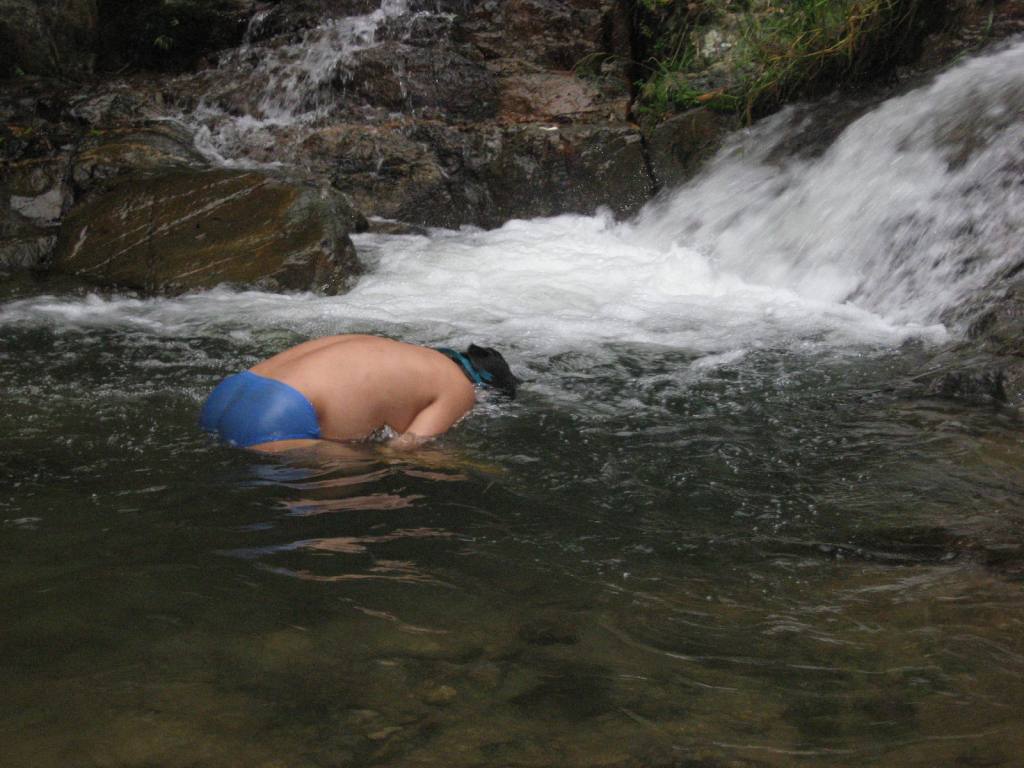
Pictures will substitute words this time.

If anyone is interested you know how to contact us.


Friday, July 8, 2011

ULUHATI: Longhouse at Uluhati

ULUHATI: Longhouse at Uluhati: "We are pleased to announce our latest addition to Uluhati, the Uluhati Longhouse. Built out of local jmaterials and along the designs of the..."

Longhouse at Uluhati

We are pleased to announce our latest addition to Uluhati, the Uluhati Longhouse. Built out of local jmaterials and along the designs of the Longhouses found in East Malaysia, the accommodation provide a unique experience for those who are tired of the city and the usual resort settings. Admittedly we have modified the design somewhat but any modification was done only with the guests interest in mind, yet by and large still maintaining the traditional design and concept.


This Longhouse compliments our other facilities, i.e. the traditional coffee house and our washroom complexes, which now place us ready to accept visitors.


In planning these facilities we had several points in mind. Top of mind was they must blend with the environment. Hence the materials used are largely from local sources. Secondly they must be reflective of the traditional Malaysian style heritage. Hence you would find little add-ons  which are standard features of Malaysian homes of yesteryear, but hardly seen anymore nowadays. The idea is to reeducate our young ones and the expose to our foreign visitors how it was like to stay in Malaysian villages, say 50 years ago, minus of course the river toilets and oil lamps.


The concept of the Longhouse was chosen for another reason, i.e. to bring back the sense of community and the close knit neighborhood of the rural society. See, when you stay in a longhouse, you cannot ignore who your neighbors are as you would be sharing a common lounge, i.e. the big open veranda. In the traditional longhouses, this is where the entire longhouse community meet daily not only to socialize but also to discuss and find solutions to issues affecting the community. We may be wrong but our feeling is, today's society has become too personalized and private that it is an accepted norm not to know your next door neighbors. That is why we hear of dead bodies found weeks after they died, or people assaulted with no help from their neighbors. Then we ask why there is no more tolerance today and the degree of violence and conflict has reached new heights. Truth be told, the human race looked nicer today with their fancy clothes, chariots and gadgets, but have we advanced or regressed in our human values. Yes, there will be many who disagree with us, but to each his own.  We have no arguments with some of us who feel that they can exist without the fellow human beings.   

 
Along with these facilities we are also ready to provide a range of activities for our visitors. These would include exposures to the traditional Malaysian lifestyle and culture, rural economic activities various outdoor activities. Do wait for our respective pages for more details.